Moveable Open Lab ADU/AUD 2025 Q1 – Esami e seminari finali del primo semestre 2025 <span class="dashicons dashicons-calendar"></span> Evento

Moveable Open Lab ADU/AUD 2025 Q1 – Esami e…
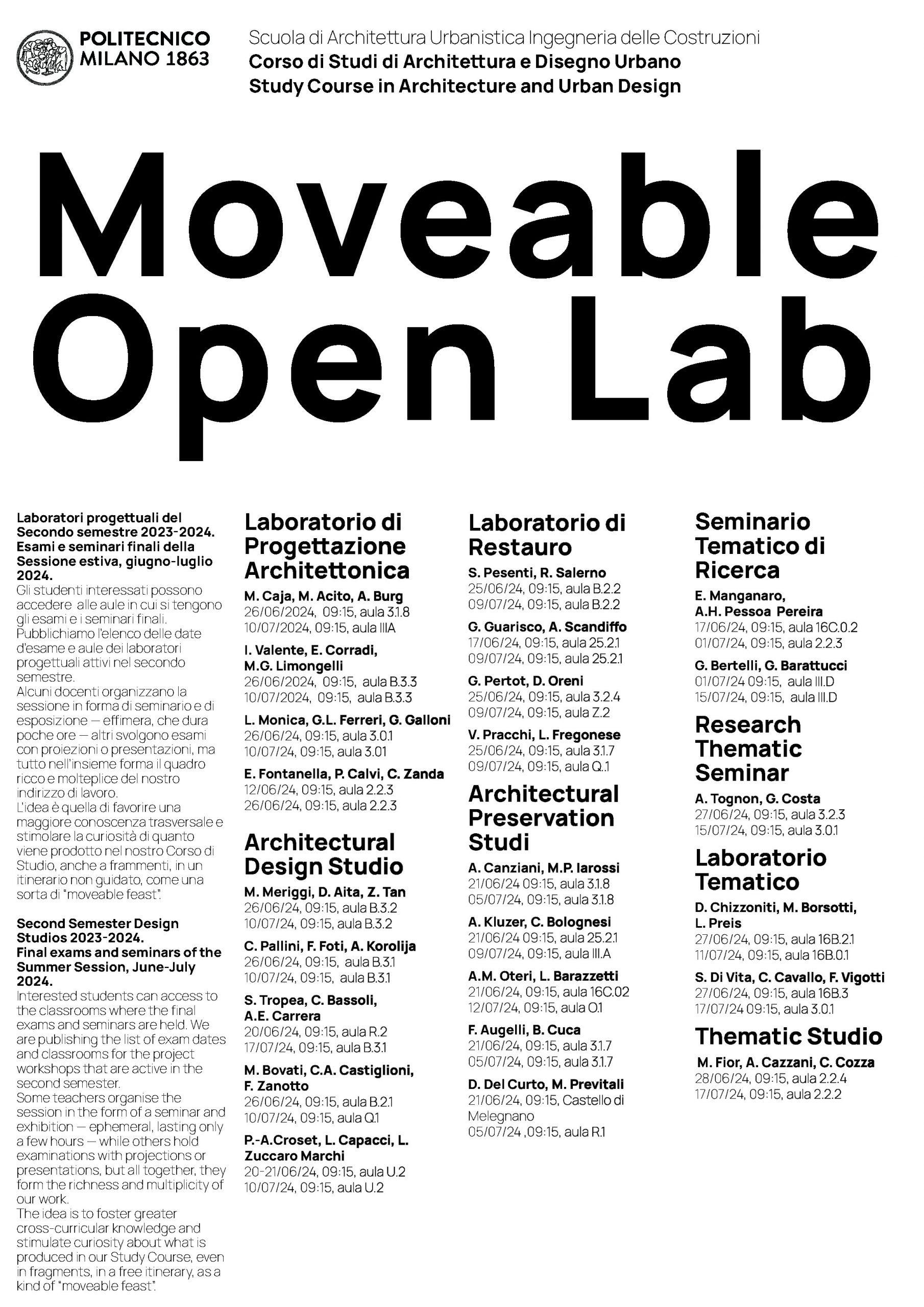
Fino al 17.7.2024 Moveable Open Lab ADU/AUD


Laboratori progettuali del Primo semestre 2024-2025. Esami e seminari finali della Sessione invernale, gennaio-febbraio 2025

Gli studenti interessati possono accedere alle aule in cui si tengono gli esami e i seminari finali. Pubblichiamo l’elenco delle date d’esame e aule dei laboratori progettuali attivi nel secondo semestre. Alcuni docenti organizzano la sessione in forma di seminario e di esposizione — effimera, che dura poche ore — altri svolgono esami con proiezioni o presentazioni, ma tutto nell’insieme forma il quadro ricco e molteplice del nostro indirizzo di lavoro. L’idea è quella di favorire una maggiore conoscenza trasversale e stimolare la curiosità di quanto viene prodotto nel nostro Corso di Studio, anche a frammenti, in un itinerario non guidato, come una sorta di “moveable feast”.


First Semester Design Studios 2024-2025. Final exams and seminars of the Winter Session, January-February 2025.

Interested students can access to the classrooms where the final exams and seminars are held. We are publishing the list of exam dates and classrooms for the project workshops that are active in the second semester. Some teachers organise the session in the form of a seminar and exhibition — ephemeral, lasting only a few hours — while others hold examinations with projections or presentations, but all together, they form the richness and multiplicity of our work. The idea is to foster greater cross-curricular knowledge and stimulate curiosity about what is produced in our Study Course, even in fragments, in a free itinerary, as a kind of “moveable feast”.
Fino al 17.7.2024 Moveable Open Lab ADU/AUD <span class="dashicons dashicons-calendar"></span> Evento

Fino al 17.7.2024 Moveable Open Lab ADU/AUD

Fino al 17.7.2024 Moveable Open Lab ADU/AUD


Laboratori progettuali del Secondo semestre 2023-2024. Esami e seminari finali della Sessione estiva, giugno-luglio 2024.

Gli studenti interessati possono accedere alle aule in cui si tengono gli esami e i seminari finali. Pubblichiamo l’elenco delle date d’esame e aule dei laboratori progettuali attivi nel secondo semestre. Alcuni docenti organizzano la sessione in forma di seminario e di esposizione — effimera, che dura poche ore — altri svolgono esami con proiezioni o presentazioni, ma tutto nell’insieme forma il quadro ricco e molteplice del nostro indirizzo di lavoro. L’idea è quella di favorire una maggiore conoscenza trasversale e stimolare la curiosità di quanto viene prodotto nel nostro Corso di Studio, anche a frammenti, in un itinerario non guidato, come una sorta di “moveable feast”.


Second Semester Design Studios 2023-2024. Final exams and seminars of the Summer Session, June-July 2024.

Interested students can access to the classrooms where the final exams and seminars are held. We are publishing the list of exam dates and classrooms for the project workshops that are active in the second semester. Some teachers organise the session in the form of a seminar and exhibition — ephemeral, lasting only a few hours — while others hold examinations with projections or presentations, but all together, they form the richness and multiplicity of our work. The idea is to foster greater cross-curricular knowledge and stimulate curiosity about what is produced in our Study Course, even in fragments, in a free itinerary, as a kind of “moveable feast”.
Evento

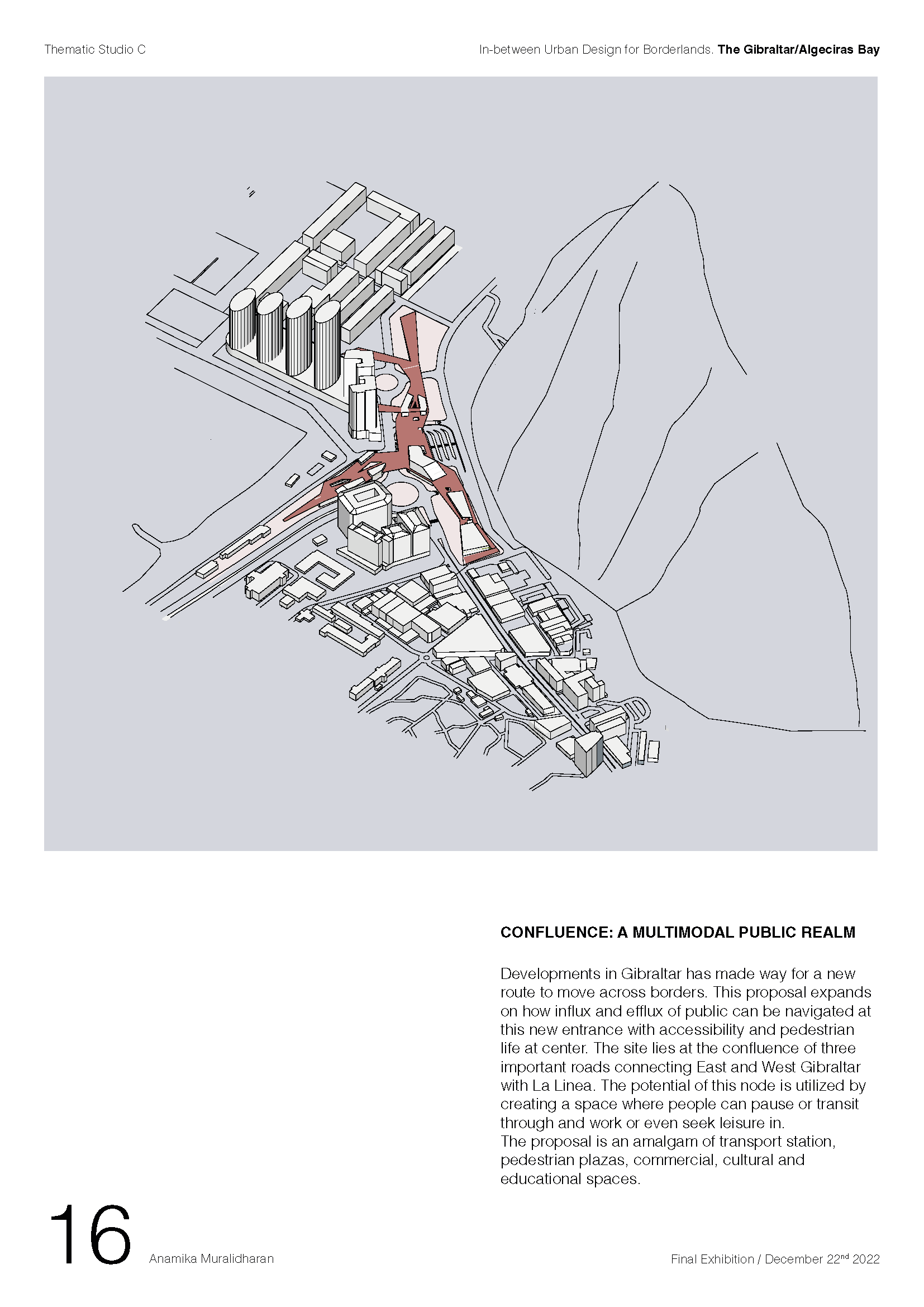
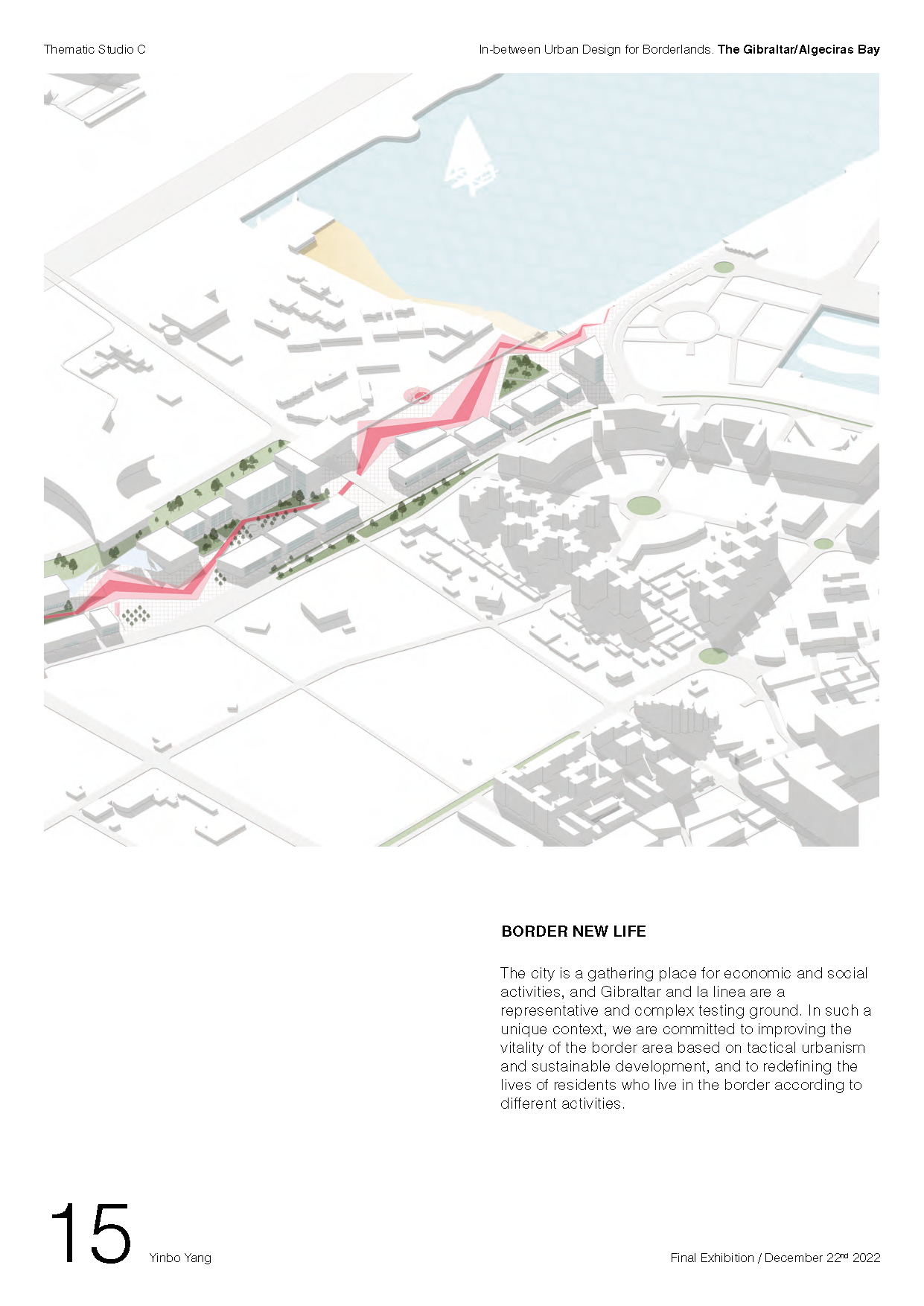
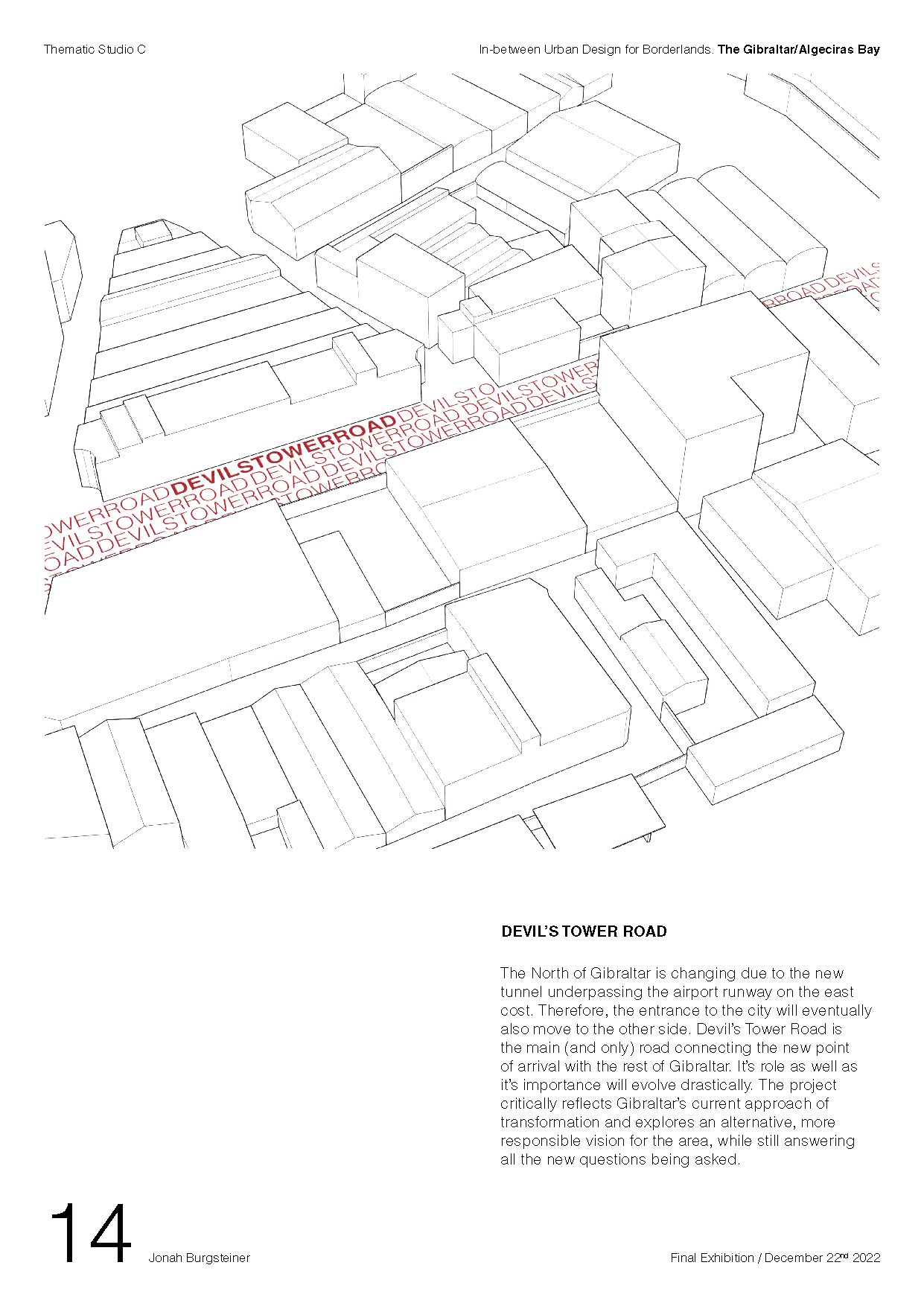
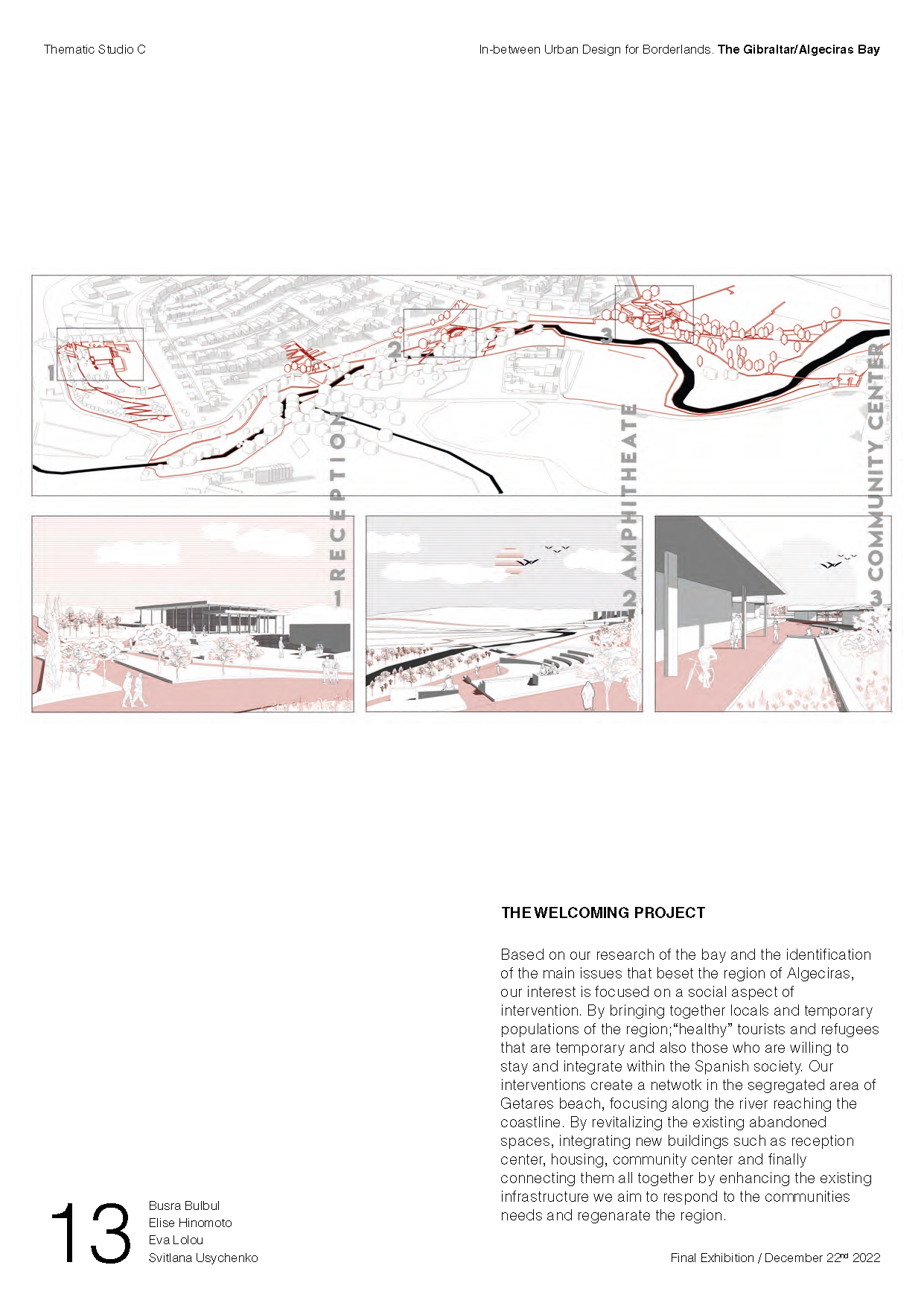
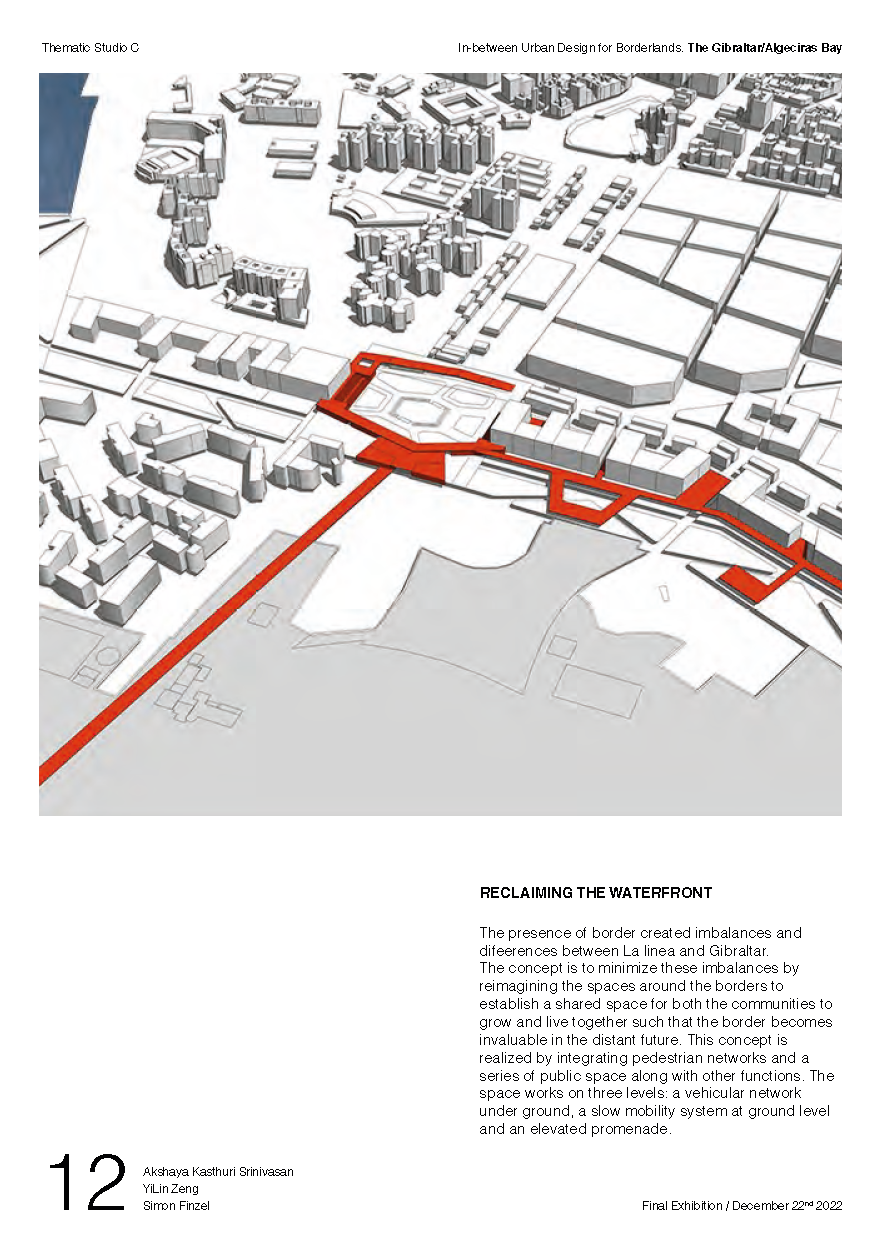
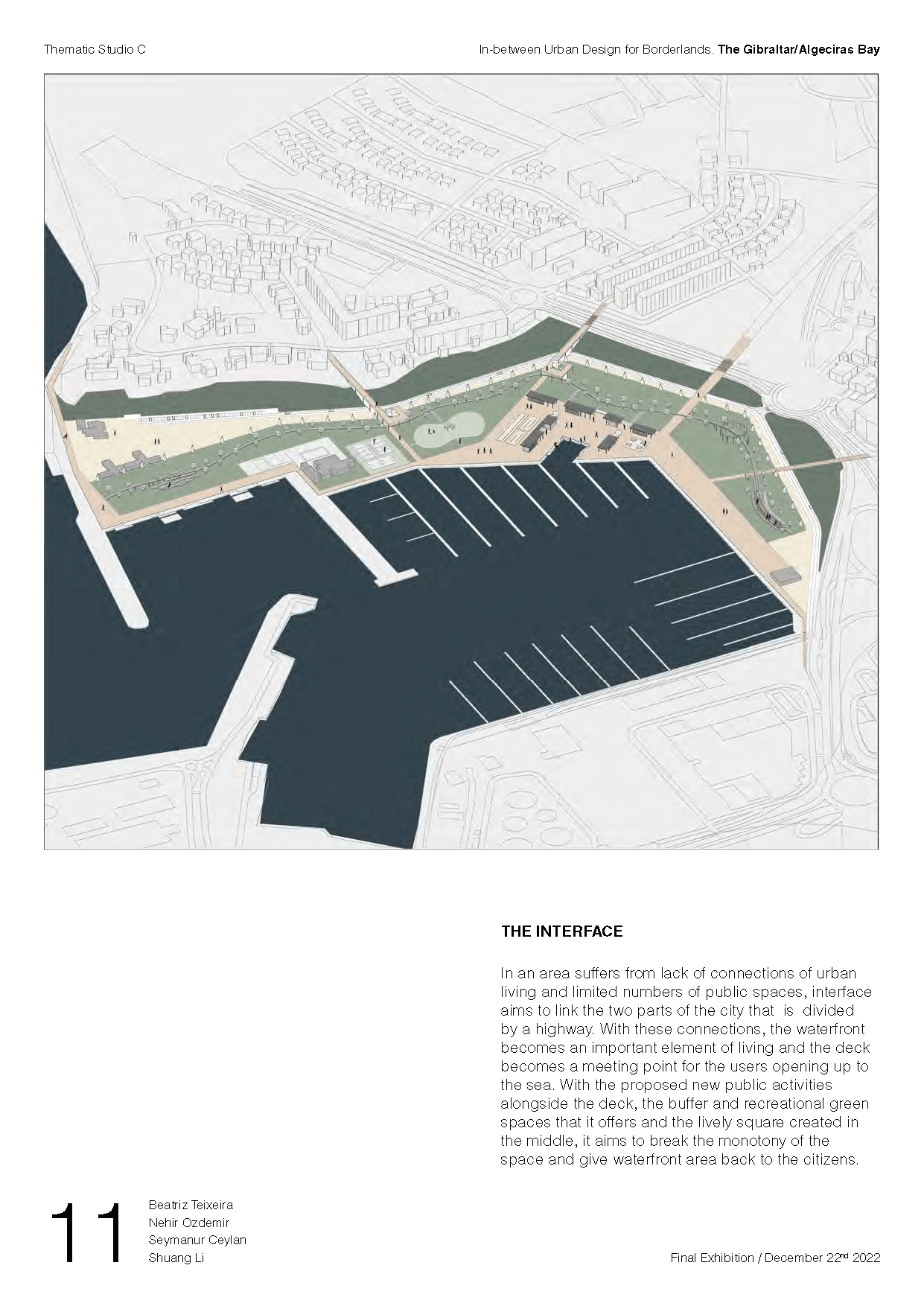
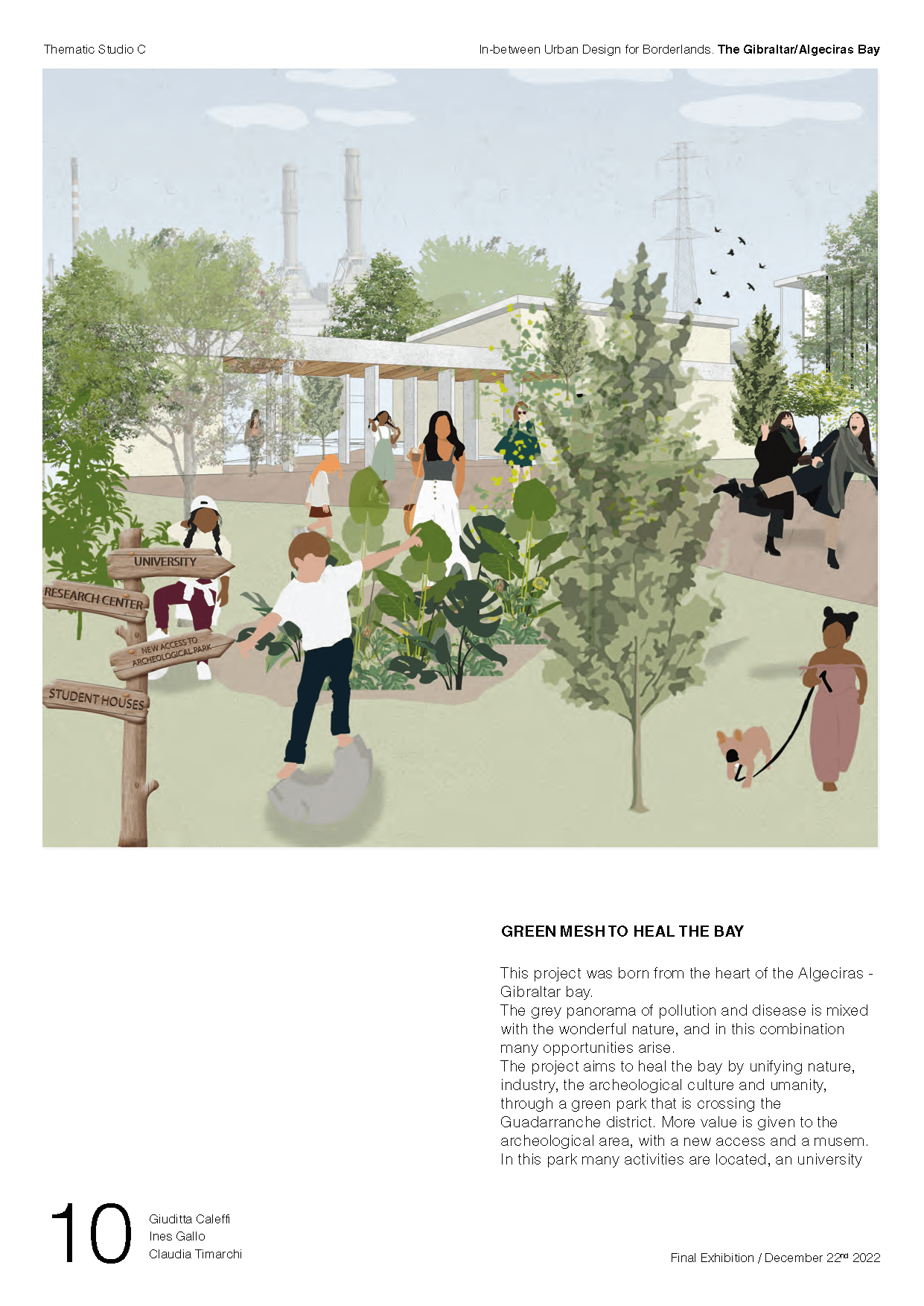
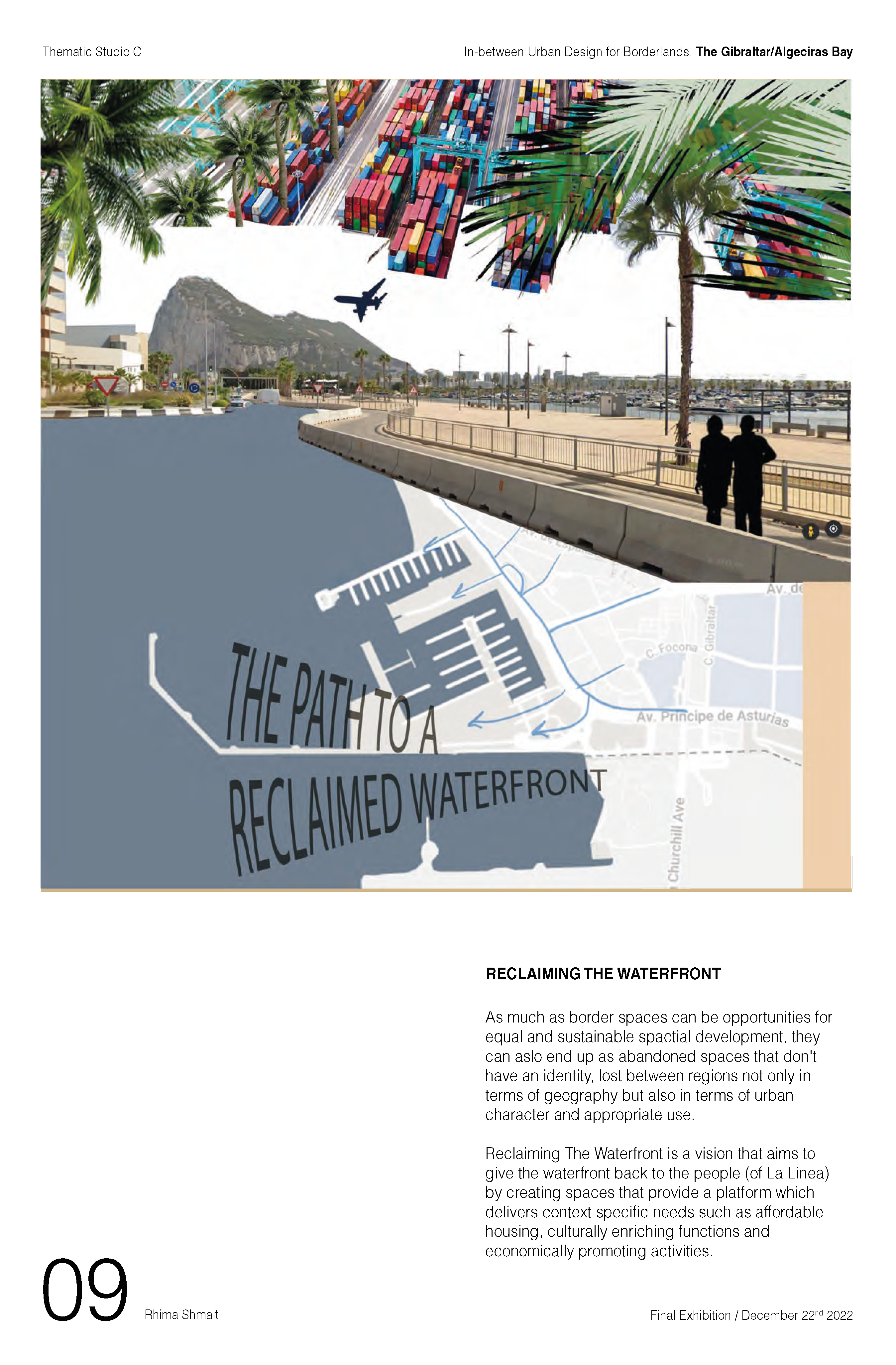
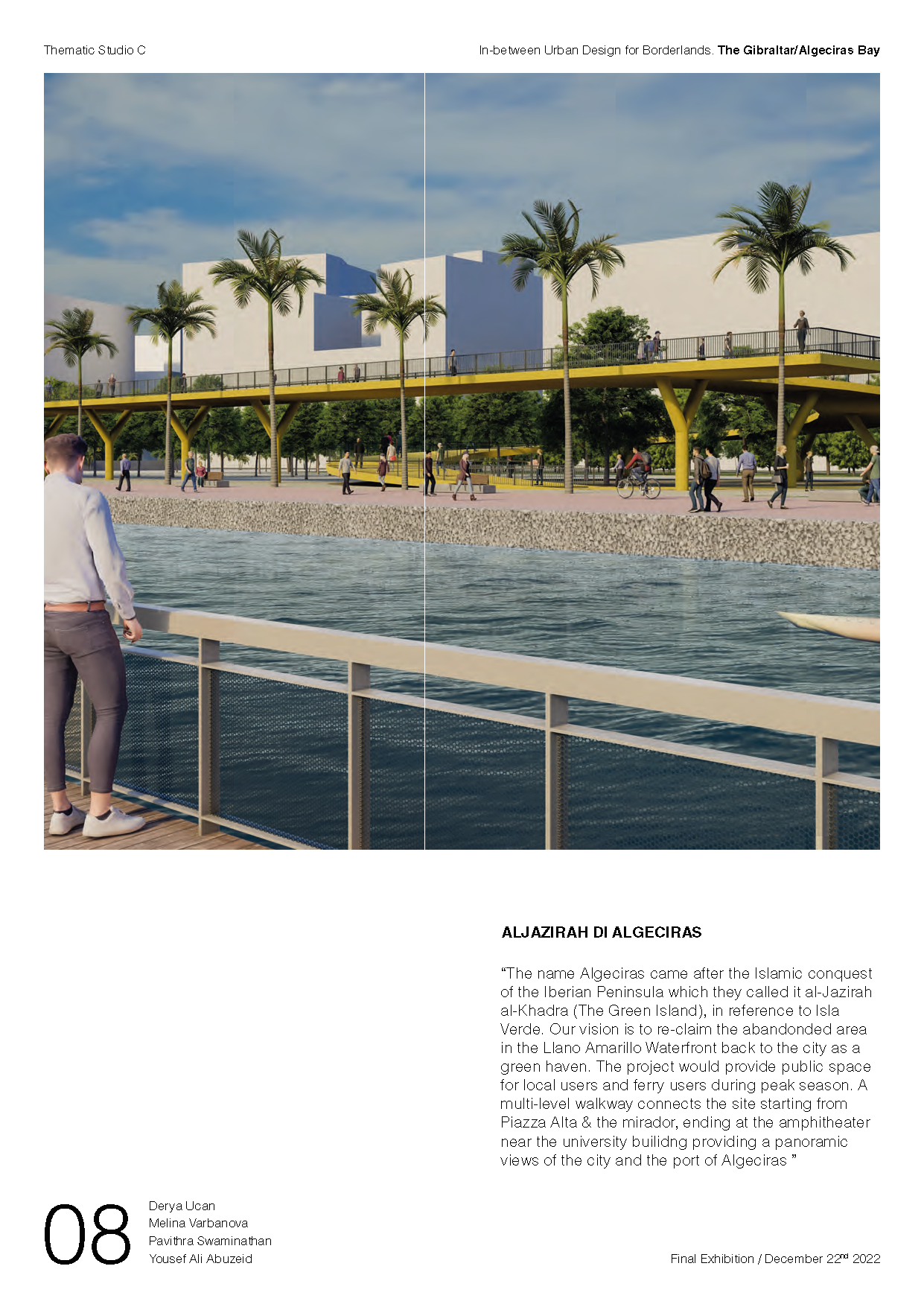
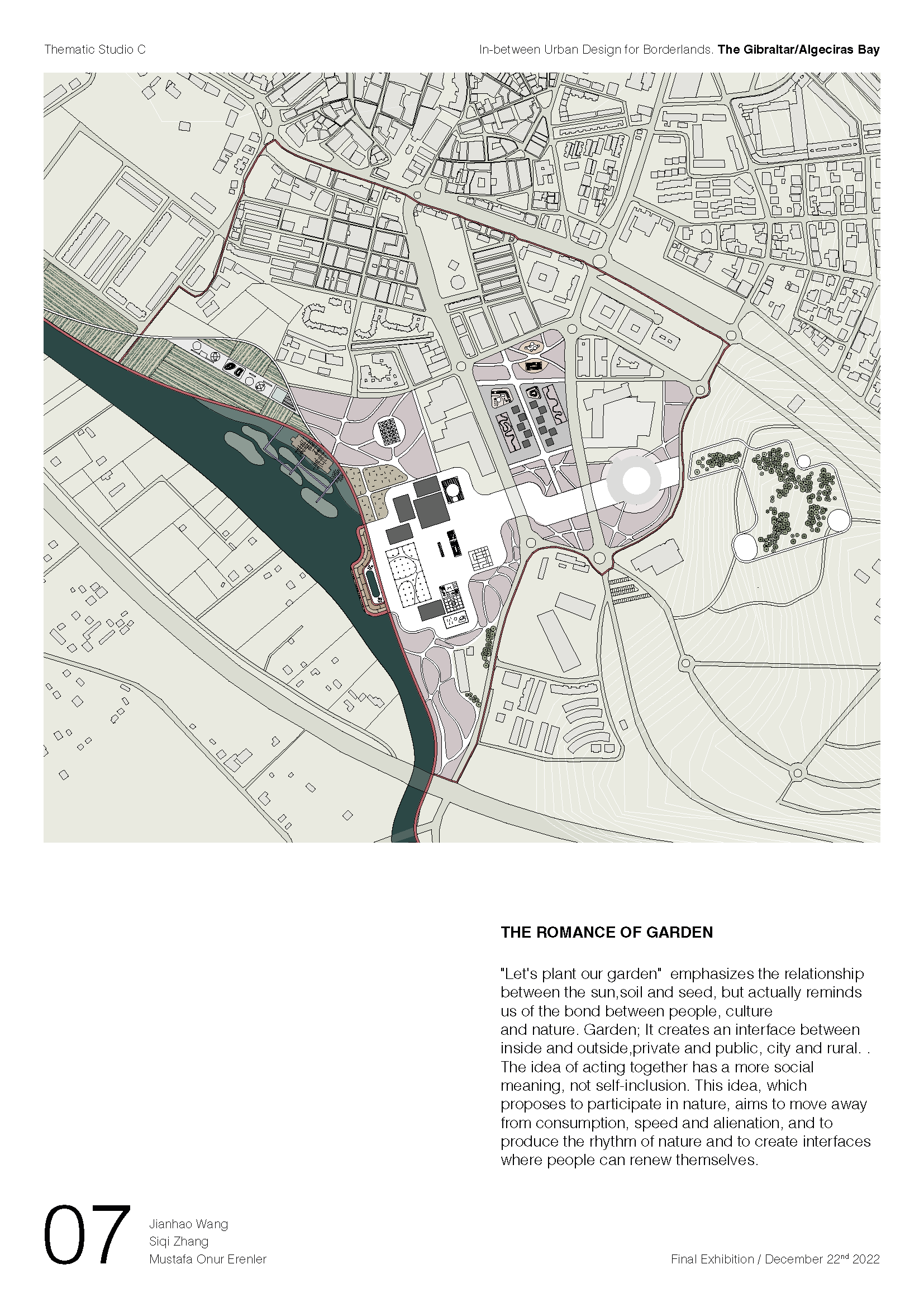
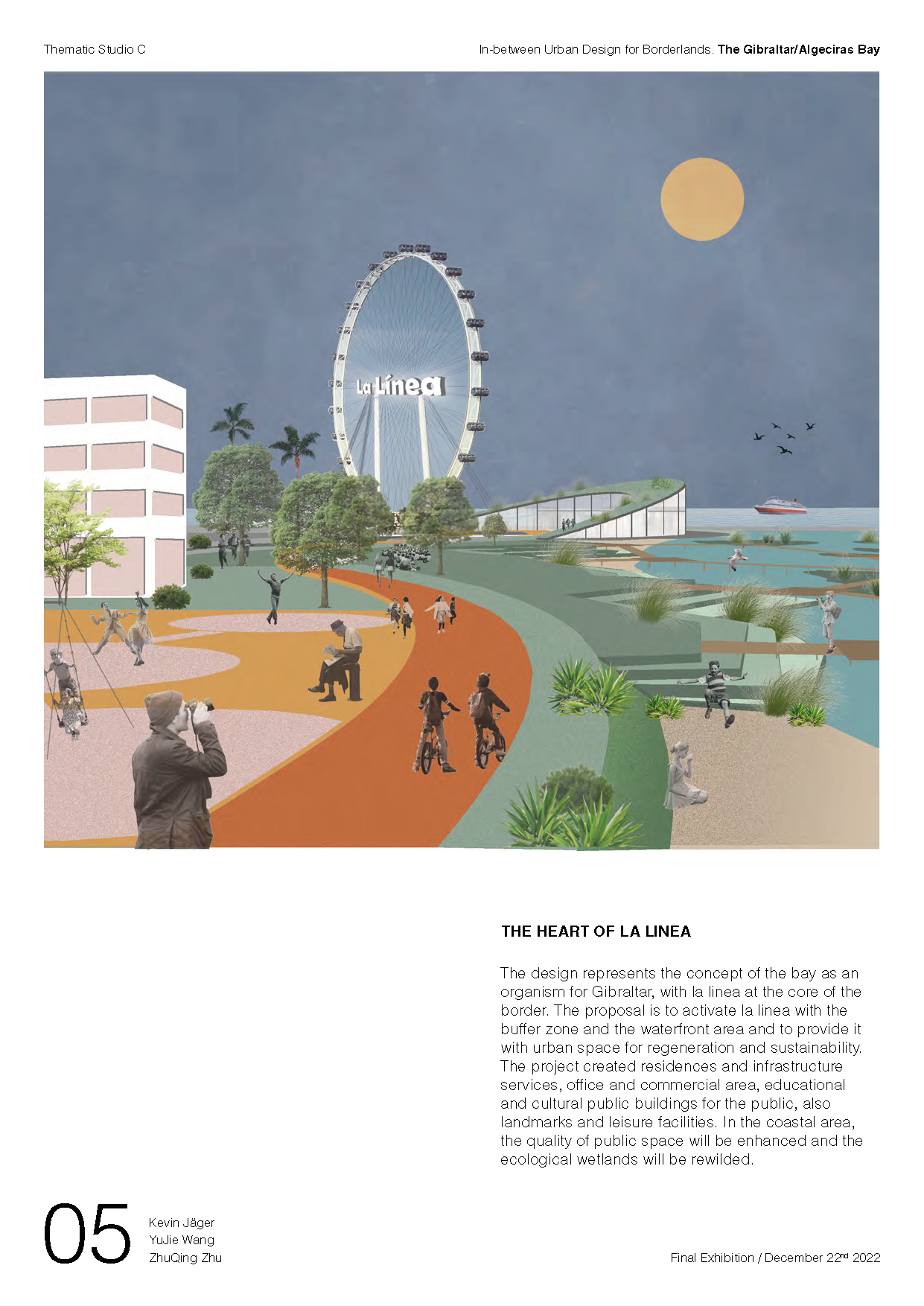
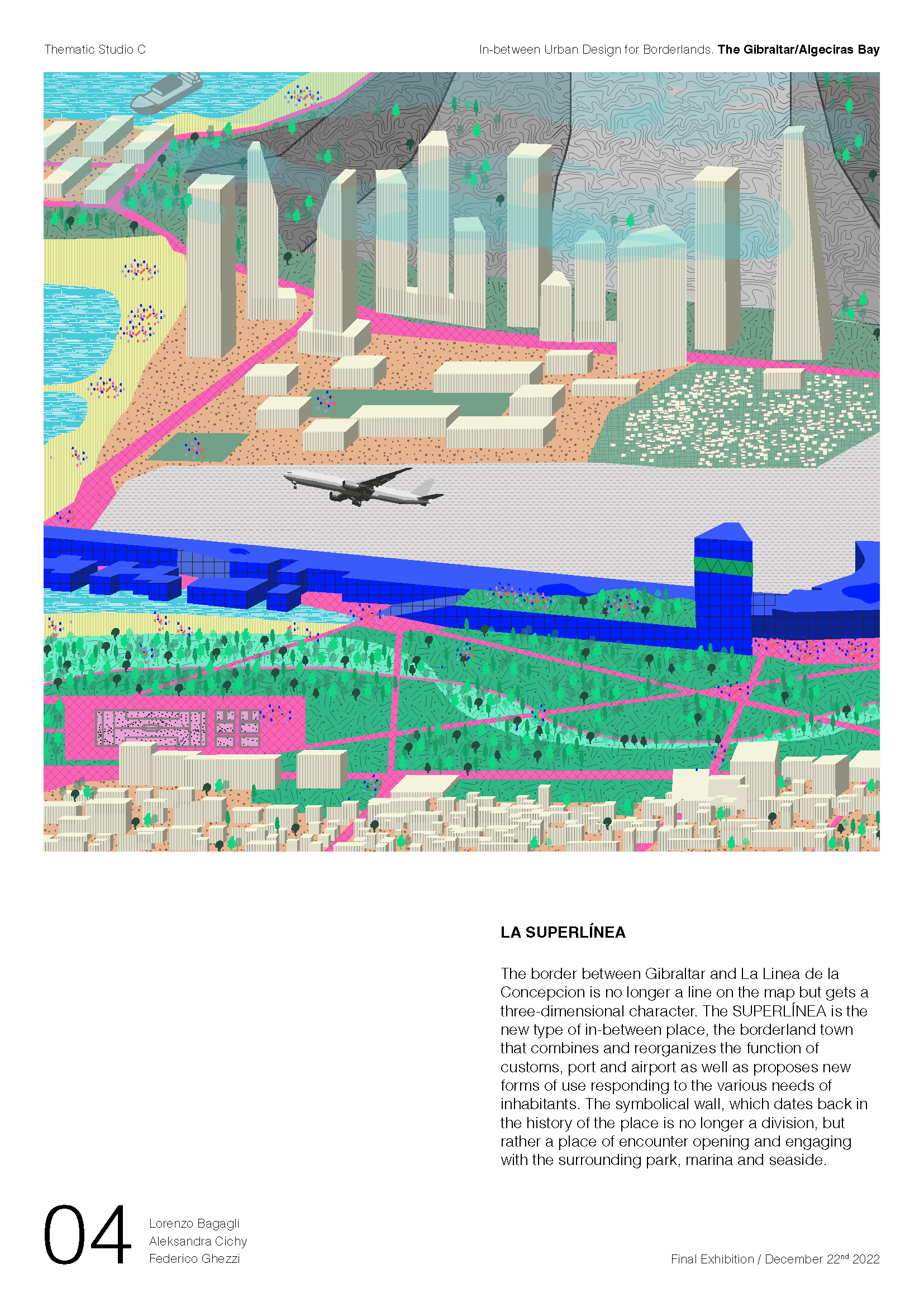
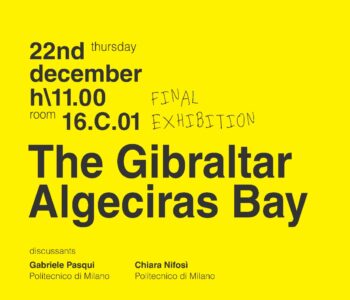
22.12.2022 | In-between Urban Design for Borderlands. The Gibraltar…

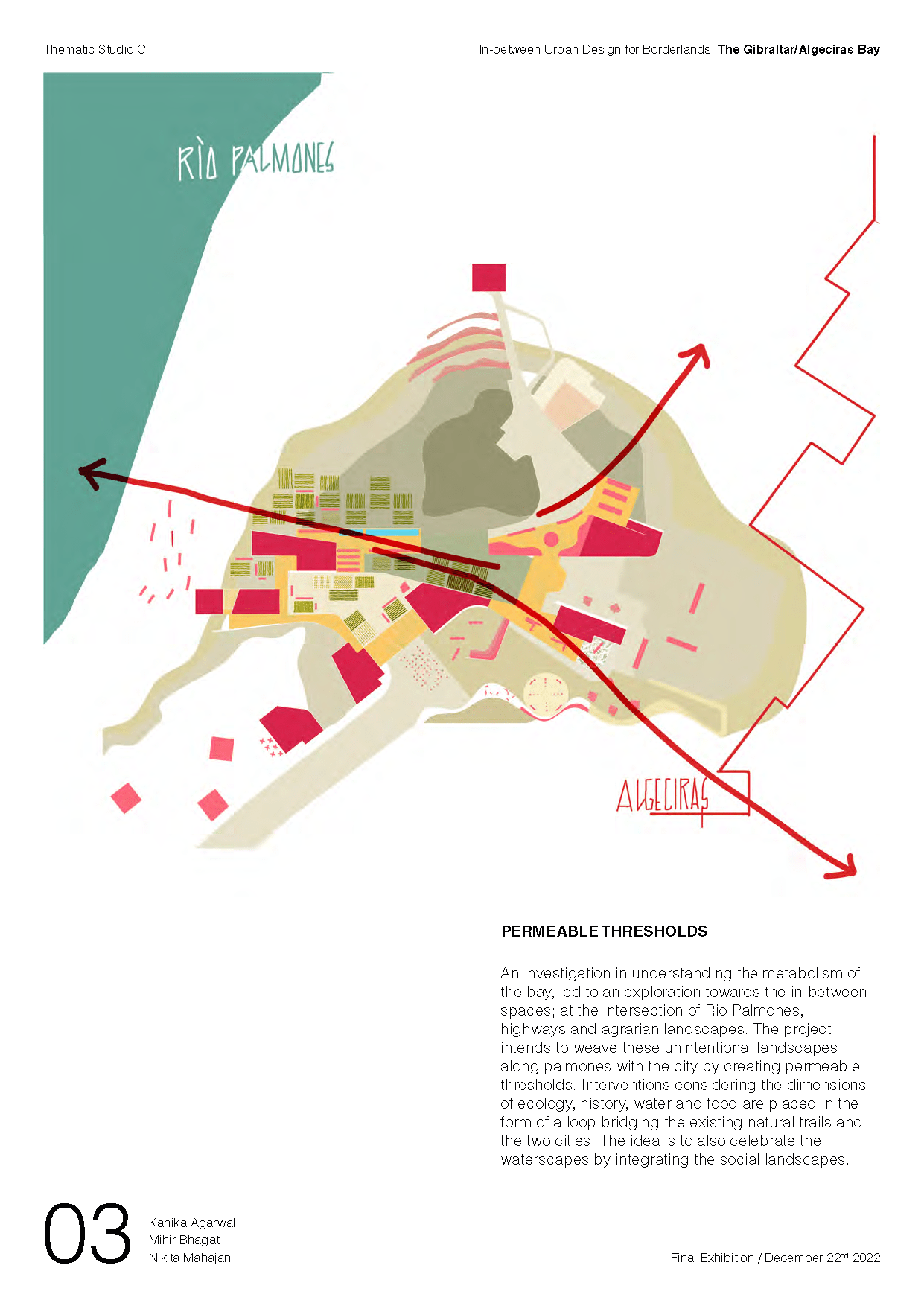
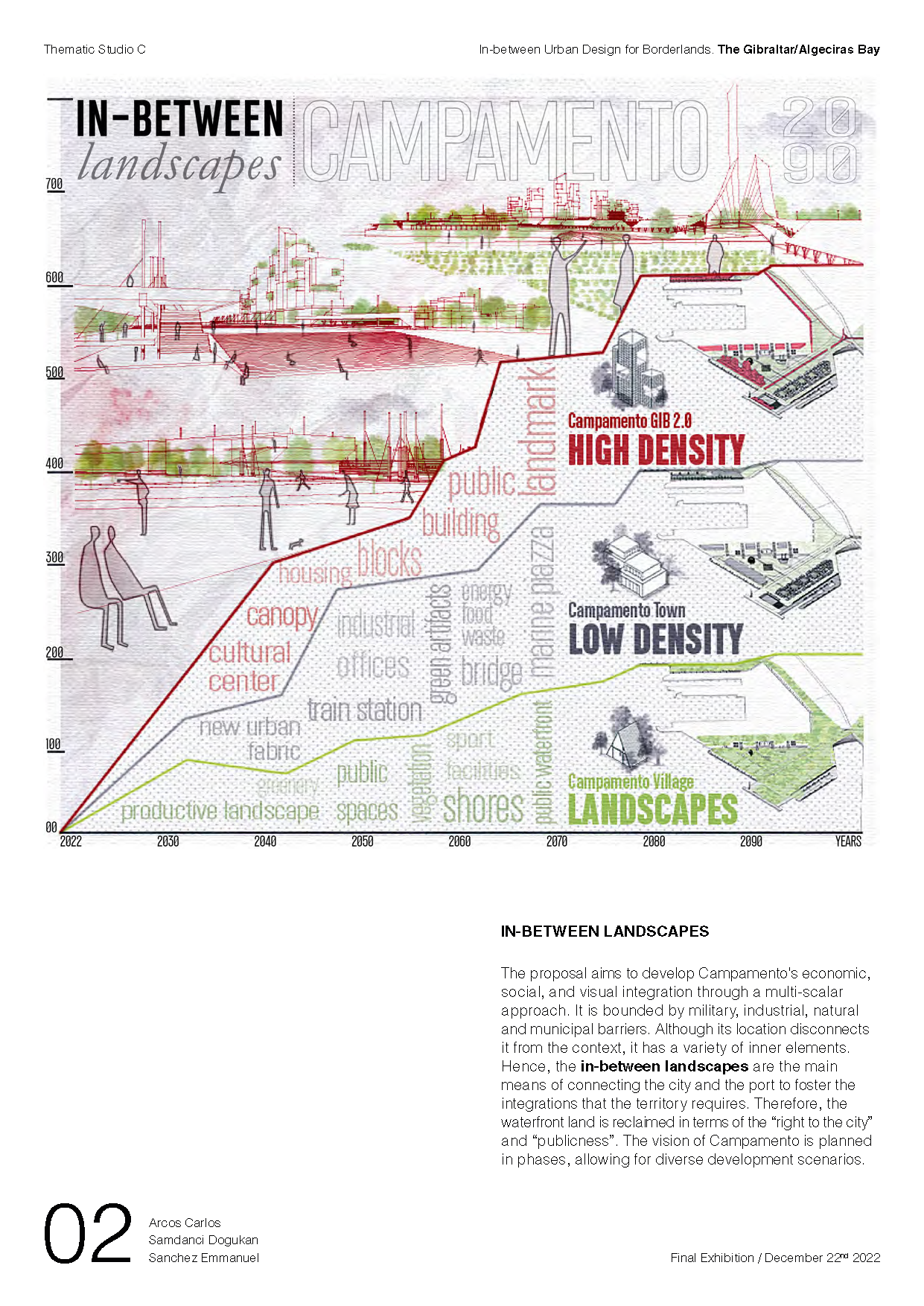
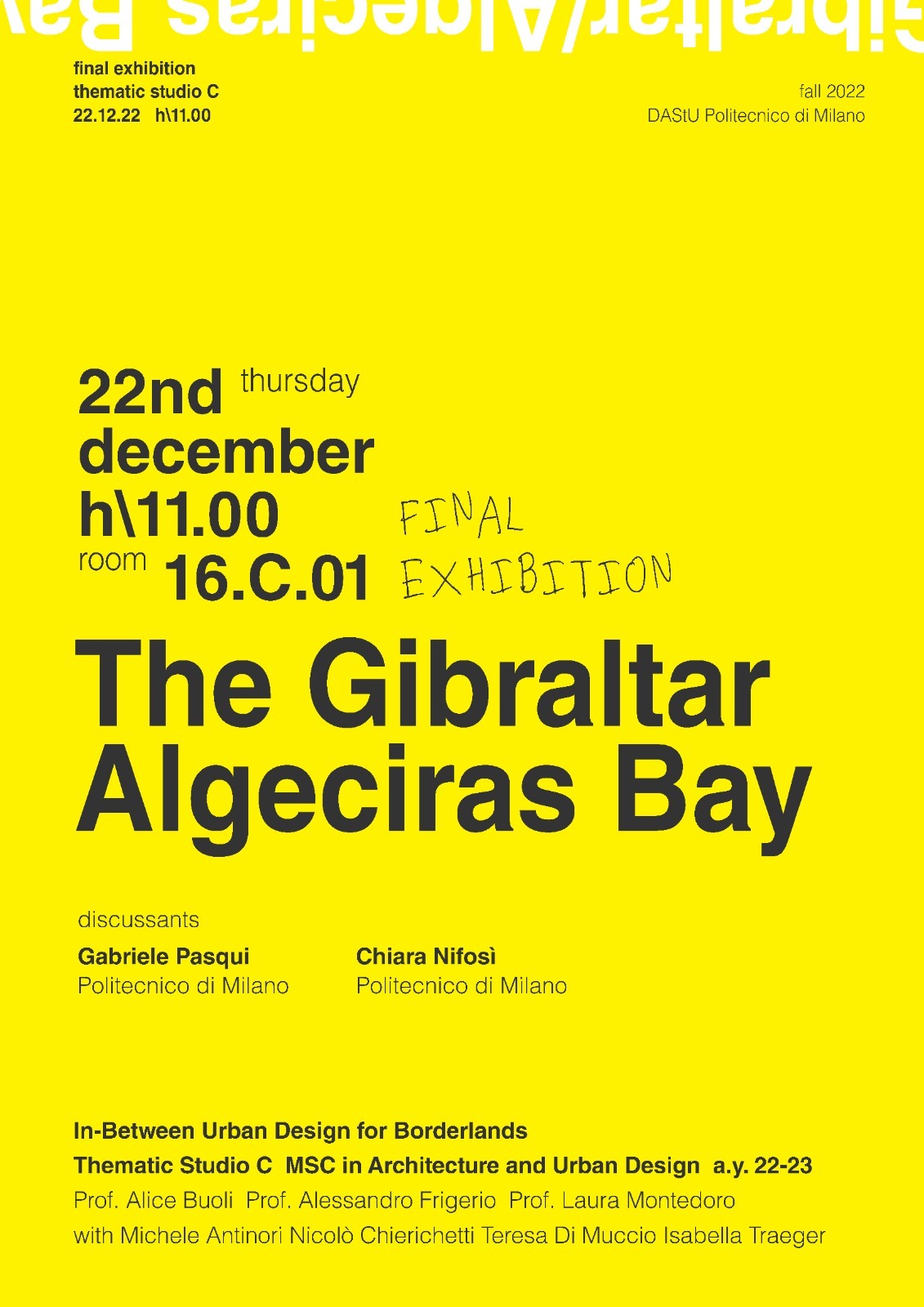
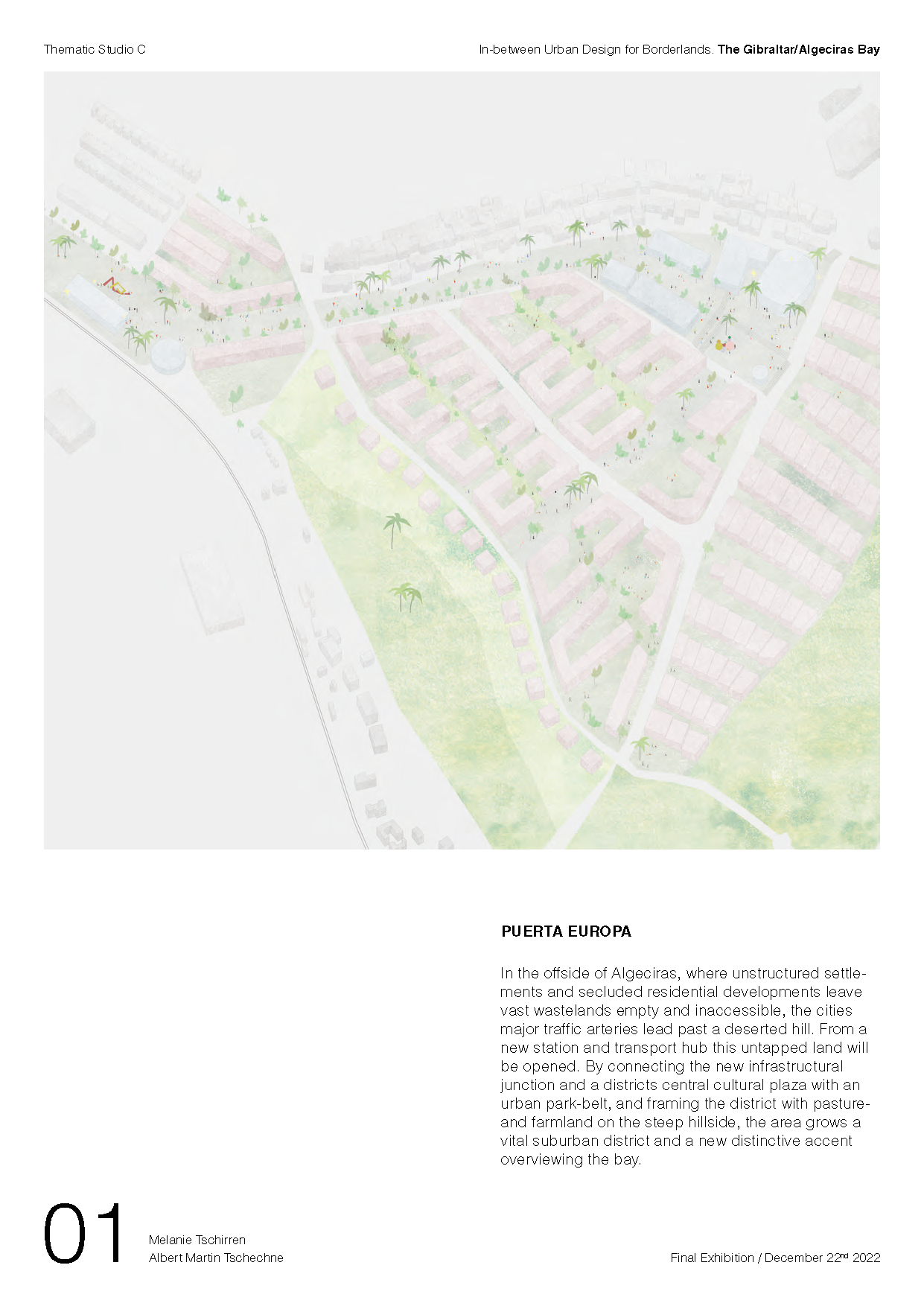
22.12.2022 | The Gibraltar-Algeciras Bay – Thematic Studio C Final Exhibition


Urban design comprehends very different variations according to specific place-based conditions and opportunities. If, on the one hand, in the European context, the main challenge for cities is today to rethink and rebuild their own identities with a view to sustainable urban regeneration, in other contexts such as North Africa, sub-Saharan Africa or the Middle-east the challenges appear to be diverse: from the upgrade of informal settlements and open spaces to the construction of new low-cost residential neighbourhoods, from the significant urban transformations as operations of the international capital, to the care of the historical heritage.

Territories and cities located in the proximity of or across international borders (and thus in-between different political, cultural and urban planning systems, and often between the so-called “Global North” and the “Global South(s)”) have been acting as catalysts of the phenomena and issues mentioned above, including local spatialisations of globalisation, environmental and socio-economic crises. Thus, borderlands appear to be relevant sites to experiment with urban design tools and solutions for a more equal and sustainable spatial development at different scales and set appropriate, inventive, context-specific, and contemporary urban imaginaries.

To this aim, the Thematic Studio adopts as its main terrain of exploration, the Bay of Gibraltar/Algeciras, a cross-border polycentric urban system whose historic and current development is intrinsically linked to two contentious borders: a trans-continental and maritime one (between Europe and Africa) in the Strait of Gibraltar, and a terrestrial one, between Gibraltar (a British Overseas Territory) and Spain.

This complex cross-border metropolitan region appears today under pressure due to a variety of overlapping issues: from the ongoing effects of the Brexit on the local economic and social sphere to the impacts of extensive productive and extractive activities on already vulnerable natural and ecological heritage and communities to the lack of shared basic services and facilities among the municipalities along the Bay, till the lack of an integrated public transport system at the local as well as regional level. All these issues are exacerbated by the absence of a shared planning vision and an effective cross-border governance structure at the metropolitan scale.


Documentazione

BAM Best Architecture Masters Ranking - logo Press

Interview – Best Architecture Masters (BAM)

1.- Please describe the beginning of your professional/academic career within the Politecnico di Milano. What would you like to highlight about its School of Architecture?

I started working at the Polytechnic of Milan, School of Civil Architecture, in 2001 after my PhD in Architectural Composition at the IUAV in Venice, with Guido Canella and Luciano Semerani and after having traveled extensively in Europe, working between Paris, Prague and Moscow, I started to study the relationship between art (painting in particular) and architecture in the period of the historical avant-garde. I started as a teaching assistant of Guido Canella and I worked with him for many years designing and creating different buildings. Thanks to him I discovered this close relationship between architecture and figuration.

Later I taught architectural design at the Faculty of Architecture of Parma and then returned to the Polytechnic of Milan where I now coordinate the Master of Architecture and Urban Design. A challenge that I’m passionate about because this course combines what I believe in: international cultural contamination, the experience of the project and the freedom to indulge taste and passion for architecture.

2.- In your opinion, why is architecture education so important for our society?

Architecture is a project that concerns the idea of how to live in the world, the elements that mark our way of living in this earthly dimension. Architecture is the life that lies within this dimension. Defining this dimension aesthetically in the short time of a life means giving us a little bit of happiness. Architects bring happiness to the world.

Architecture is a project that concerns the idea of how to live in the world, the elements that mark our way of living in this earthly dimension. Architecture is the life that lies within this dimension”

3.- How do you see Architecture Academy in the future? What would you like to be different?

I have always been a dreamer and I dream that the academic field is a breeding ground for ideas and collaborations to change the way, make it a better, happier place …

In the future, I imagine school as a space for cultural exchange, for comparison between people with different levels of experience and knowledge who share their skills to solve problems.

I imagine the school of architecture as a large laboratory where knowledge makes available their skills to build alternative scenarios of associated life, spaces and ways for work, for assistance, for culture and for leisure. A laboratory where numbers and colors scientists, historians and critics, mathematicians and painters, engineers and philosophers can live together, united by a common goal in putting the project of a new world at the center of their research efforts, and the space that defines this new world. A shared, democratic, sustainable space in which disparities are attenuated and the desire for an aesthetic dimension is experienced together with the ethical one. This space belongs to a complex vision of reality and for this reason architecture requires more disciplines to help decipher this complexity.

School can no longer be a place for academics where you can only learn … perhaps, and luckily, it will never become like that anymore …

4.- What’s your academic vision in Master Architecture and Urban Design at Polimi? What would you like to highlight?

The course comes to life in Milan, the most innovative and ever-changing Italian city, but travels virtually through the cities and cultures of the world in a constant search for architectural stimuli and inspirations. The course is also enriched with lateral points of view with respect to the Italian architectural design culture thanks to professors of declared international experience (Stefano Boeri, Kazuko Sejima among others) who bring concrete and constantly evolving examples of forms and spaces of the contemporary city and settlement phenomena in emerging countries.

Our challenge is to take them and make them ours! Our community of students and teachers from more than 40 different countries around the world tries, day by day, to respond adequately to the growing complexity of the problems and new responsibilities that architecture must take on in the transformation of the human environment: forms and spaces of the contemporary city, the settlement phenomena of emerging countries, construction innovation, environmental sustainability, care, respect and enhancement of the architectural heritage … etc.

“I imagine the school of architecture as a large laboratory where knowledge makes available their skills to build alternative scenarios of associated life”

5.- Which are the main characteristics that a good architecture professor should meet?

An action of oblivion and one of memory perhaps is needed …To forget being a professor while teaching … and to try to imagine how much more effective the professor could teach if predisposed towards learning from students during his own lessons …

6.- Which advice would you give to someone who just finished her/his postgraduate studies and wants to become a competitive professional in architecture?

Find your way through commitment and responsibility so that you can be the architect of your world: be what you want to be and not what the others think you should be.

7.- Can you suggest another School of Architecture or country where you would like to teach? Tell us why.

Here where I am teaching, I confess, I think it is one of the best schools of architecture. But if I really had to choose I would prefer to go to a school that still does not exist today, where it is possible to return to the foundations of the ethics of doing architecture … free and independent of the ranking, by those who teach and regardless of where it is located … An ideal school that looks only at the needs of humanity. I am constantly looking for it but I still haven’t been able to find it.

8.- Given the current situation of the world regarding COVID-19, how do you think it will affect the architecture education in the near future?

Education has been hit particularly hard by the COVID-19. In this condition educational needs cannot be forgotten, like other critical needs such as health, water and sanitation that are being responded to. I’m referring to those without access to education, such as international students, that are more vulnerable and unprotected. Education cannot wait and can have an equally detrimental impact if left unaddressed.

In architecture, continuing education through alternative learning pathways, as soon as possible, must also be a top priority right now. We need innovative approaches: virtual laboratories, augmented and virtual reality centers; interactive simulation labs, etc., which break down the barriers of distances. In the short term, this means changing the approach to problems and directly involving students in a shared vision of the emergency, with self-managed work programs. In the longer term, it is necessary to establish resilient educational systems with adaptive capacity to be able to be administered in the event of emergencies, even remotely, to mitigate and manage risk in the future.

“It is necessary to establish resilient educational systems with adaptive capacity to be able to be administered in the event of emergencies, even remotely, to mitigate and manage risk in the future”

9.- What do you think architects can do to face a crisis like the one we are experiencing in present times?

In this situation, architects have an enormous responsibility: they must continue to think with a new glance of the continuous changes we are subjected to in order to give concrete, but also daring, experimental, innovative answers to the spaces in which we live, work, produce … increasingly porous spaces and transparent, in which the limit between inside and outside becomes an easily overcome barrier … to break down segregation and feel an increasingly important part of an entire community.

10.- Do you think the COVID-19 situation will change the way our cities and buildings are conceived? Would it represent a significant change in our manners and priorities?

I think the most important aspect of this condition concerns the new way of looking at ourselves and the world. We need to be able to reverse the negative aspects of this experience into opportunities. A great statesman like Winston Churchill said that «the optimist sees opportunity in every danger, the pessimist sees danger in every opportunity». As architects we cannot deal with the complexity of problems through elementary and simple solutions. This recent condition offers many chances to re-think the space we inhabit seeing with different eyes.

“This recent condition offers many chances to re-think the space we inhabit seeing with different eyes”

The BAM Team appreciates the time Professor Chizzoniti dedicated to complete our interview and we invite you to learn more about his professional work at the  Politecnico di Milano by visiting the following links.


ATTACHMENTS